NOISE-CON 2026 Short Courses
All Courses will be held on Wednesday, July 8, 2026
Registration for the courses will open when the conference registration opens in February.
You do not have to register for the conference to attend the short courses.
Certificates will be provided after completion of the course.
Please note that lunch will be on your own for all short courses from 12:00 PM –1:30 PM.
Coffee will be available for all short course attendees.
Using Viscoelastic Materials to Solve Noise and Vibration Problems (Half-day course)
Time: 8:00 AM – 12:00 PM
Price: $400 per student, includes coffee
Instructor: Brandon Sobecki and Matt Butner, Damping Technologies, Inc.
Overview:
Viscoelastic Damping treatments can be a highly effective tool for mitigating noise and vibration environments in complex, built-up structures. When properly designed, passive damping solutions can significantly reduce excessive random vibration, attenuate noise radiated by resonant structure-borne paths, address noise generated by coincident wave matching, and diminish the impact of propagating shock waves.
Compared to traditional mitigation strategies such as increasing stiffness or mass, Constrained-Layer Damping (CLD) offers several advantages: it is typically additive, requires minimal design changes, and generally introduces less weight than structural modifications. Despite these benefits, passive damping is often overlooked due to the challenges associated with accurately predicting system behavior once damping is integrated.
This course will review the key principles of damping and introduce modern approaches to designing and optimizing damping solutions. Topics will include:
-
Overview of passive damping nomenclature
-
Viscoelastic material properties and methods for parameter extraction
-
CLD theory, modeling guidance, and best practices
-
Case studies comparing damping effectiveness in:
-
turbulent boundary layer radiated noise
-
random vibration on conic structures
-
shock propagation through conic structures
-
Use of viscoelastic materials in forced vibration problems (using a tuned vibration absorber design example)
Fundamentals of Signal Processing (Half-day course)
Time: 8:00 AM - 12:00 PM
Price: $400 per student, includes coffee
Instructor: Stephen A Hambric, Hambric Acoustics
Overview:
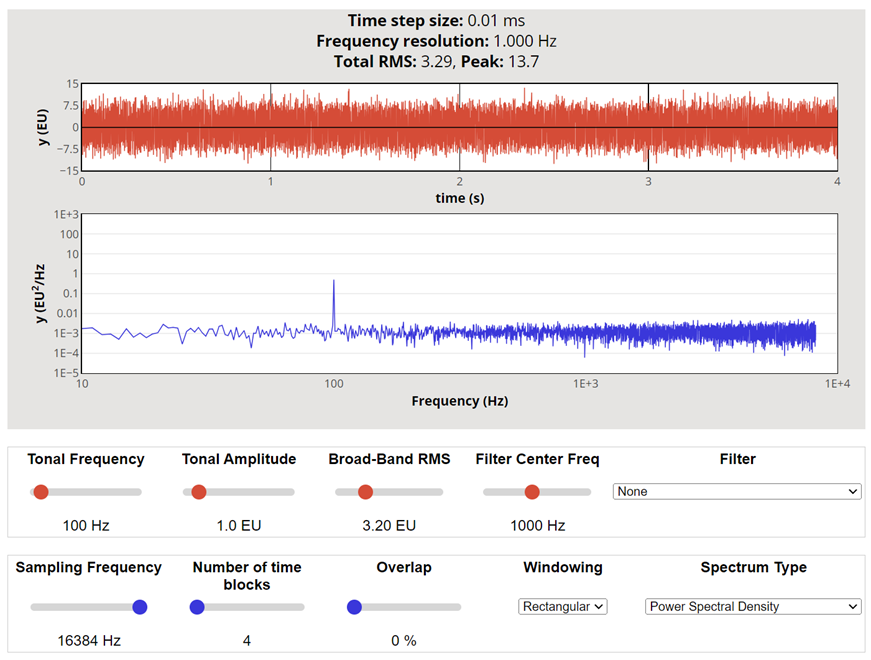
Measured sound and vibration time histories are often processed into frequency-dependent power spectra. There are many ways to do this and the spectra can vary a lot depending on the processing parameters you choose. In this short course we will explain:
-
The Fast Fourier Transform (FFT) – the backbone of spectral processing
-
The difference between power spectra and power spectral densities and which is best for analyzing tonal and broad-band signals
-
Processing parameters like sampling rate, record length, windowing, and overlap
-
Basic filters like low-pass, high-pass, band-pass, and A-weighting
-
Narrow-band and broad-band (octaves, one-third octaves) spectra
-
Spectrograms (time-varying frequency spectra)
-
Other tips and best practices
We’ll use the open-source software Audacity and my online signal processing demonstrator (https://www.hambricacoustics.com/demos/SAH_vibroacoustic_demos.html). You will read various .wav files into Audacity and process them yourselves. You will export narrow-band spectra and import them into Microsoft Excel to compute one-third and full octave band spectra along with overall dB and dBA levels.
INCE Fundamentals Prep Course and Exam
Time: 10:00 AM - 3:00 PM (course), 3:30 PM - 5:30 PM (fundamentals exam)
Price: $100 with purchase of NOISE-CON 2026 Registration; $200 without NOISE-CON 2026 Registration (Short Course Only registration)
Instructor: Andy Carballeria, Acentech Inc.
Underwater Radiated Noise, Reduction and Measurement (Half-day course)
Time: 1:30 PM - 5:30 PM
Price: $400 per student, includes coffee
Instructor: Michael Bahtiarian, Acentech Inc.
Overview:
The half-day course will introduce attendees to Underwater Radiated Noise (URN) from ships. There will be a brief introduction to general acoustics and underwater sound metrics. The course will address the transmission of shipboard sound and vibration to URN and principal methods for reduction for each of the sources and paths. Treatments used outside the hull will be discussed, including flow improvements, quiet propellers, and air bubble systems. Engineered treatments used within the hull will be discussed, including vibration isolation mounts, equipment enclosures, hull damping, and plating insulation. Operational measures for reduction of URN will also be addressed. Example treatments and outcomes will be given. Measurement and quantification of URN will also be discussed including: instrumentation; hydrophones, arrangements of at sea measurement systems. Finally, the course will discuss relevant standards for measurement of vessel URN from ANSI, ASA, ISO and the Class Societies.
Vehicle Sound Package Materials (Half-day course)
Time: 1:30 PM - 5:30 PM
Price: $400 per student, includes coffee
Instructor: Dr. Pranab Saha
Overview:
The half-day short course provides an understanding of different sound package materials that are used in vehicles (including passenger vehicles, heavy trucks, and off highway vehicles) and how they reduce the noise in vehicles. The course defines three different types of acoustical materials: absorbers, barriers, and dampers, explains their differences, discusses the factors that are critical for improving the performance of these materials, and discusses different test methods to evaluate the performance of them. This short course is an introductory course and designed to make participants familiar with sound package materials from the application viewpoint.
Attendees will learn:
-
Three fundamentally different sound package materials that are used in ICE and EVs
-
Descriptors of these different materials and how they are different from each other
-
How these materials work and how their performance can be improved
-
How these materials perform in an application
-
Various standards and test methods to determine the performance of these materials.
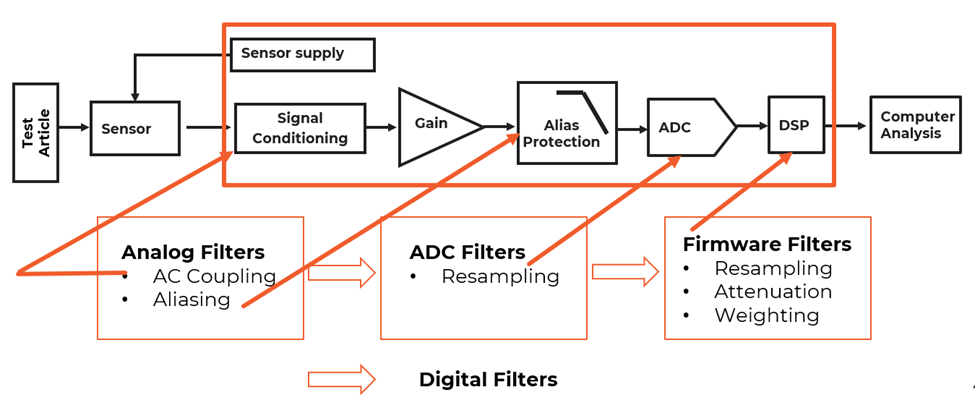
Data Integrity: Understanding uncertainties created by the Data Acquisition Process, Filtering and Transforming Data to the Frequency Domain Tutorial (Full-day course)
Time: 8:00 AM - 5:30 PM
Price: $800 per student, includes coffee
Instructor: John Hiatt, Dewesoft
Overview:
This tutorial will inform the attendees on uncertainties in the data acquisition process, cover in detail the transform from the time to frequency domain and provide attendees with an understanding of how filters work and impact the data. The intent is to clearly define in a practical sense, errors that occur in these processes and how to mitigate these errors. We will also understand the assumptions made and how to deal with their impact, when transforming this data from the time to the frequency domain. We hope the attendees will learn from our mistakes and have a better understanding of these processes.
Who Should Attend: Engineers, Technicians and Analyst who want to familiarize themselves with the data acquisition process and the common digital signals processing tasks.